The hardest storage space in the house has a pipe through the middle of it, gets wet, and holds the things you least want a child to reach. A working plan for it.
Every house has one cupboard that defeats everybody, and it is almost always the one under a sink. It has a pipe through the middle of it, an uneven floor, a door that opens the wrong way, and it holds bottles that leak. It is also, in most kitchens, the single largest piece of unused volume in the room.
It is solvable. Not tidy in the photographic sense, but genuinely workable, and the plan below is the one we have arrived at from designing for the space rather than from styling it.
The mistake that ruins this cupboard is treating it as a box with an obstacle in it. It is not. It is two narrow spaces with a plumbing column between them, and the sooner the arrangement accepts that, the better it works.
Measure it as two spaces. Clear width to the left of the trap, clear width to the right, and the depth of each. They are rarely equal, because the trap is rarely centred, and the shut-off valves usually intrude on one side more than the other. Write both numbers down.
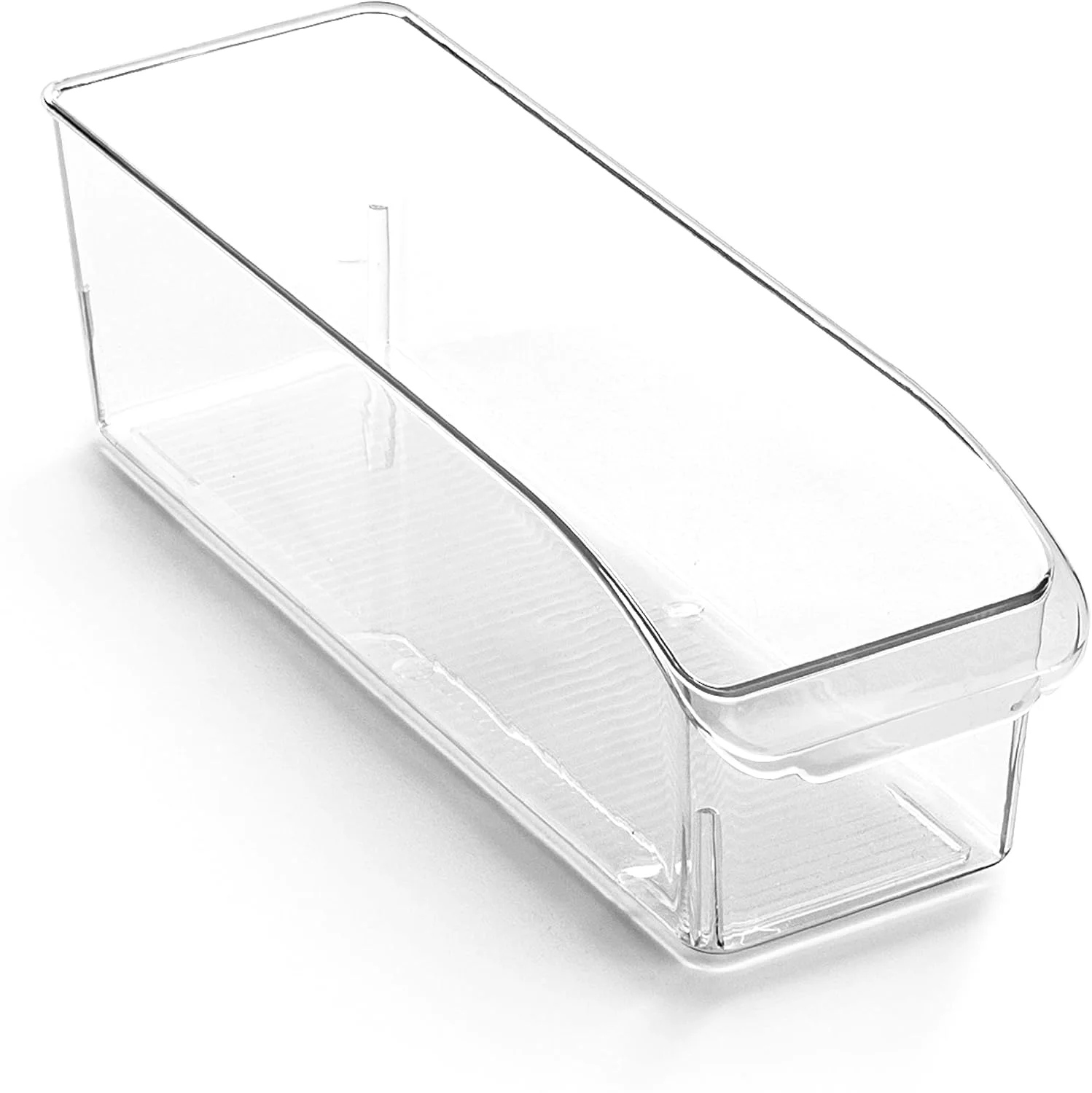
This is the one place in a house where two narrow containers beat one wide one every time. A wide bin has to sit in front of the plumbing, which wastes the depth behind it, or it does not fit at all.
| Approach | What goes in | Usable depth | What goes wrong |
|---|---|---|---|
| One wide bin across the front | Bottles, cloths | Front third only | Everything behind the plumbing is lost |
| Two narrow bins either side | Bottles left, cloths and bags right | Nearly all of it | Looks less symmetrical |
| Two narrow plus a low tray behind | Adds spares and refills at the back | All of it | The back tray needs pulling out |
Under-sink cupboards get wet in two ways and both are slow. A connection weeps a drop a day and the base swells before anybody notices; or a bottle of something leaks in the corner and sits there.
The design response is not to try to prevent this. It is to make it visible and survivable, which means three things: everything in a container rather than loose on the base, containers you can lift out in one movement, and nothing porous stored directly on the floor of the cupboard.
A bin turns a leak from a repair job into a rinse. That is the strongest single argument for containerising this cupboard, and it is a bigger argument than tidiness.
The mould guidance is worth reading here even though it was not written about cupboards. The EPA is blunt that mould control is moisture control, that nothing grows without water, and that wet things want to be dry inside 24 to 48 hours. A cupboard nobody opens for a month fails that deadline without anybody doing anything wrong.
The practical version: once a season, take everything out, wipe the base dry, and look at the underside of the trap. Two minutes, and it is the check that catches the slow weep before it becomes a floor.
General information from a public agency about moisture and mould, not advice about your particular home and not a safety claim about any particular product.
This changes the rules from every other cupboard in the house, in a way that is easy to miss when you are planning it standing up.
You look down into this cupboard, not into it from the side. That means clear walls matter less than they do anywhere else, and an open top matters more. A lidded box under a sink is a box you will not open.
It also means depth is cheap here. Pulling a bin out at floor level is easy, so the deep bin that would be a mistake on a wall shelf is a good idea on the floor of a cabinet, as long as it slides. What kills a low bin is a base that grips the cupboard floor, which is the opposite of what you want on a shelf.
And weight is free. This is the lowest shelf in the room, which makes it the correct place for the heavy things by the same public safety logic that says to keep heavy items on lower shelves for stability. Bulk refills, the spare bottles, the iron: all of it belongs down here rather than in the wall cabinet above the counter.
A summary of public safety guidance about stability and storage height, not advice about your particular room and not a claim about any particular product.
Before any container goes in, it helps to be clear about what this cupboard is for, because most of them are holding at least three things that should live somewhere else.
The cupboard under a kitchen sink is good at exactly four jobs. It is the nearest cupboard to where water and mess happen, so it should hold the things you reach for while standing at the sink: cloths, sponges, washing-up liquid, bin bags. It is low and out of sight, so it takes the bulky and ugly: the mop bucket, the spare rolls, refill bottles. It is next to the plumbing, so it is where the shut-off valves must stay reachable. And it is the room's biggest single volume, so it can carry the bulk buying that would otherwise fill a cupboard you use every day.
| Zone | What goes in it | Why there |
|---|---|---|
| Front left or right | Cloths, sponges, bin bags | Reached ten times a day without kneeling |
| The other front side | Washing-up liquid, spray, brush | Wet things together, on a surface you can rinse |
| Behind the plumbing | Refills, spare rolls, rarely used tools | Twice-a-year items, in a bin you hook out |
| Directly under the trap | Nothing | This is where a leak shows itself |
| On the door, if there is room | One caddy for the thing you reach for most | The only storage that does not lose depth |
What does not belong: food of any kind, because this is a warm damp cupboard next to a drain; anything paper or cardboard, for the same reason; and appliances you use weekly, which end up here because they are ugly and then never get used because they are inconvenient.
Almost every under-sink cupboard develops a faint smell after a few years, and people usually treat it as a cleaning problem. It is nearly always one of three mechanical things, and none of them is solved by scrubbing.
The organising contribution to this problem is real but modest: if everything is in containers you can lift out in one movement, you will actually check, and checking is the whole of it.
Two constraints change the answer. You cannot fix a slow weep yourself, and you cannot drill into the carcass for a rail or a rack.
The first one makes the inspection habit more important rather than less: a leak you notice in week one is the landlord's problem, and a leak you notice in month nine has become an argument about a swollen cupboard base. The empty patch under the trap earns its keep here.
The second rules out most of the clever solutions and leaves the simple one, which happens to work almost as well: two free-standing bins either side of the plumbing, and a tension rod across the cupboard at the back for spray bottles to hang from by their triggers. Nothing screwed to anything, and it all comes with you.
This cupboard holds the household chemicals, it is at floor level, and in most kitchens it is the least secure door in the room. That combination deserves a paragraph that is not about bins.
If there is a small child in the house, the cleaning products do not belong in this cupboard at all, whatever container they are in. A bin with a handle makes them more portable, not less reachable. The cupboard under the sink is the right place for the mop bucket, the spare cloths, the bin bags and the refills of things that are not hazardous; the actual chemicals want a high cupboard with a door that a child cannot open.
This is the point where a storage brand is supposed to describe a child-resistant latch and sell you one. We do not make one, and a bin cannot substitute for one. The honest version is: move the bottles up, and use the good low space for the bulky harmless things.
That last one is the instruction most likely to be ignored and the one that matters most. The empty patch under the plumbing is not wasted space: it is the inspection window.
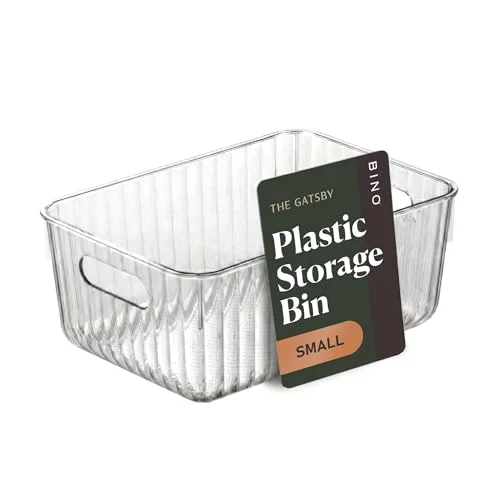
Under a bathroom basin the space is smaller, the trap takes proportionally more of it, and the humidity is constant rather than occasional. Everything above applies with the moisture rule turned up.
Two extra habits help. Store nothing cardboard down there, because cardboard in a damp cupboard is a wick. And leave the door ajar for an hour after a bath or a shower, which is the domestic version of the ventilation advice: the room dries, and the cupboard dries with it.
If the bathroom cupboard is the space you are solving, our our piece on clear, frosted and woven covers the other half of it, and the bath and shower shelf of BINO organizers is where the drained caddies live. For getting the dimensions right before ordering anything, our guide to measuring a shelf has the method.
And if you want the arithmetic done for you, the planner on our front page takes the two widths you measured either side of the trap and tells you what goes in each of them.